Prepare. Respond. Recover.
Engineering resilience means preparing for disruption, enabling intelligent response, and recovering quickly with minimal impact.
As demand grows, infrastructure ages, and weather becomes more extreme, resilience depends on more than reliable equipment. It requires a distribution grid intentionally engineered to prepare for changing conditions, respond intelligently, and recover quickly when disruption occurs.
Prepare
Build resilience before disruption occurs. The strongest distribution grids are engineered long before an outage begins. Planning for advanced protection, intentional system design, and proven distribution strategies helps identify vulnerabilities, reduce risk, and strengthen system performance before disruption occurs.
Respond
Enable intelligent response.
When conditions change, resilient distribution systems can detect emerging issues, provide greater operational visibility, and act automatically. Intelligent protection and control help isolate faults, reroute power, and reduce the impact of disruption.
Recover
Restore power safely and quickly.
Purpose-built technologies reduce outage duration, improve crew safety, and help utilities and critical power operators restore service and return critical infrastructure to normal operation with minimal disruption.
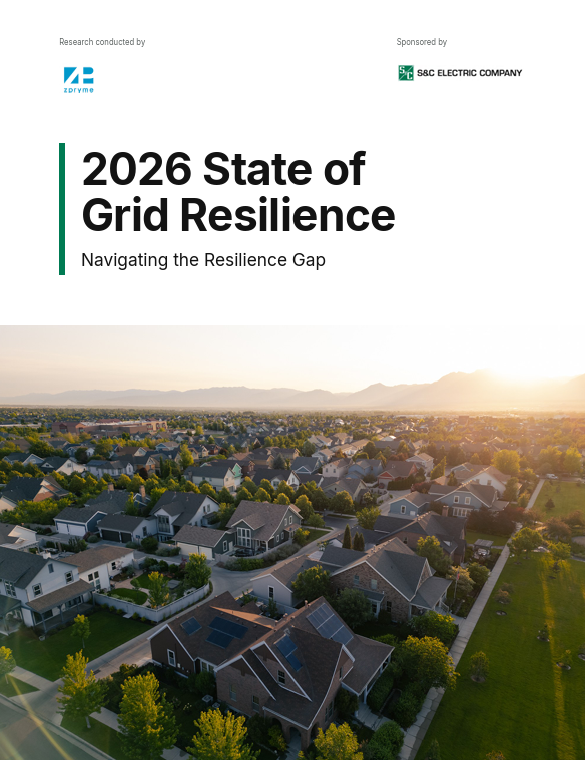
2026 State of Grid Resilience
Only 48% of respondents agree that current reliability metrics adequately capture performance during major disruptive events.
Explore Resilience Solutions
Every resilience challenge is different. Explore the solutions that strengthen distribution system performance before, during, and after disruption.
Automate Fault Response
Isolate faults and reroute power automatically to keep more customers connected.
Explore Feeder Fault ResponseExtend Distribution Intelligence
Bring intelligent protection and control to more points across the distribution system.
Explore Distributed IntelligenceProtect Critical Operations
The same distribution expertise trusted by utilities helps critical power operators, including hospitals, manufacturers, campuses, and data centers, improve resilience where uninterrupted power is essential.
Explore Critical InfrastructureDesigned. Built. Tested. Proven.
The Energy Transition
Resilience Success Stories
Eliminating Momentary Outages and Isolating Faulted Line Segments
Read Full Case StudyImproving Storm Resilience With Self-Healing Technology
Read Full Case StudyReducing Outages Through Data-Driven Lateral Protection Strategy
Read Full Case StudyRestoring Power to C&I Customers 99% Faster
Read Full Case StudyAutomatically Finding and Isolating Faults Without Communications
Read Full Case StudyKeeping Temporary Outages from Becoming Permanent
Read Full Case StudyLearn More About Advancing Resilience
Grid Resilience
September 29, 2026
Grid Resilience
September 16, 2026
Grid Resilience
August 24, 2026
Grid Resilience
August 20, 2026
Grid Resilience
July 15, 2026
Grid Resilience
June 25, 2026
Grid Resilience
July 06, 2026
Grid Resilience
June 08, 2026
Grid Resilience
June 01, 2026
Grid Resilience
May 05, 2026